
26 November, 2025
Fariba Bowen
4- minute read
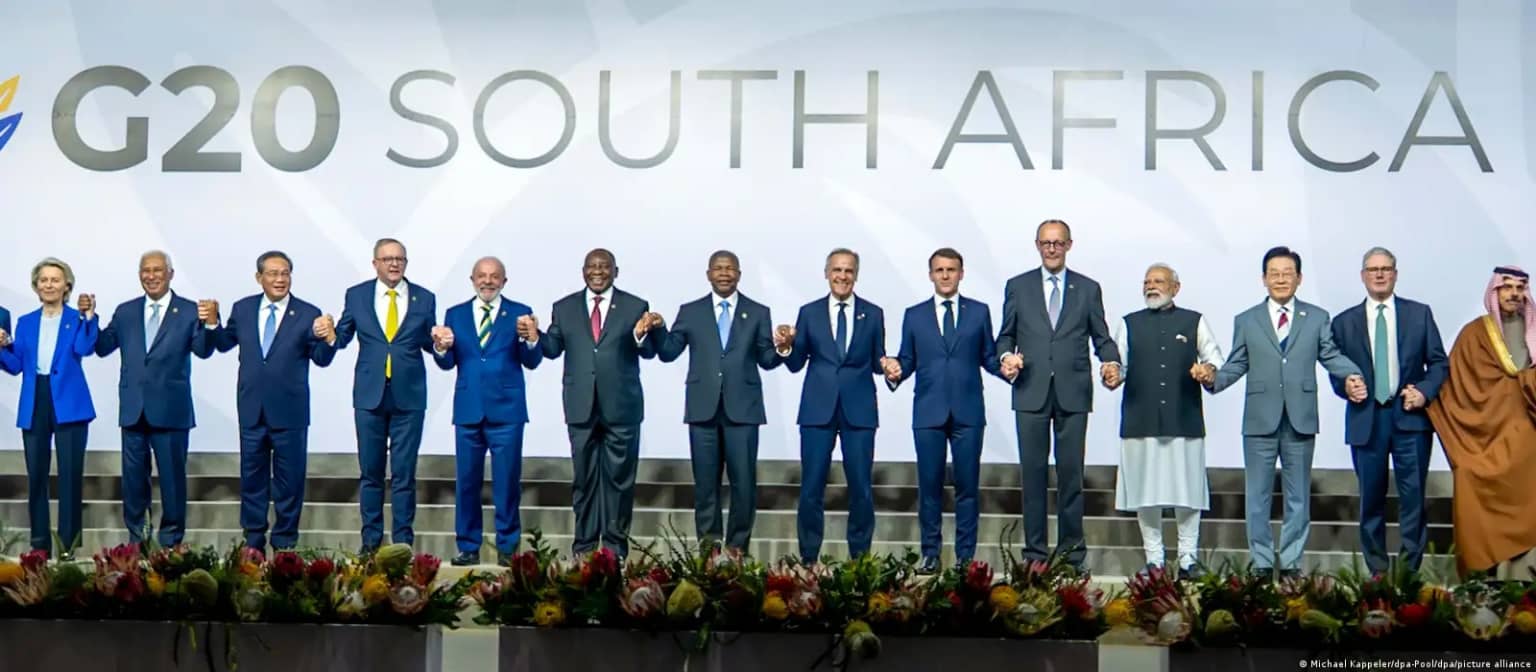
The recent G20 Leaders’ Summit in Johannesburg – the first ever on African soil – has delivered a declaration that is a powerful mandate for South African industry, particularly for corporate HR and transformation leaders. The summit, under the South African Presidency, successfully shifted the G20’s focus towards the Global South, embedding African priorities like development, industrialisation, and debt relief firmly in the global agenda.
The G20 South Africa Summit Leaders’ Declaration is far more than a diplomatic document, it is a blueprint for the future of work and industry transformation, urging businesses to prioritise inclusivity, skills development, and climate-aligned growth. For HR and transformation executives, the declaration underscores several critical areas that will shape corporate strategy and compliance in the coming years:
Decent Work and Transformation: The declaration places good quality jobs and decent work at the heart of sustainable industrialisation. This is a clear signal that the global community, through the G20, supports national efforts to reduce inequality through robust labour institutions, fair wage-setting mechanisms, and universal social protection. This aligns perfectly with South Africa’s mandate for broad-based socio-economic transformation.
The Future of Skills and Youth Employment: Drawing heavily from the Fancourt Declaration by G20 Labour Ministers, there are specific commitments to expand technical and vocational education and training, apprenticeships and lifelong learning. Corporate HR must align training initiatives with the growing demands of the green, digital, and care economies. The focus on reducing youth unemployment and addressing barriers for disadvantaged youth is a direct call to action for corporate social investment and talent pipelines.
Digital and AI Economy: The G20 reaffirmed its commitment to harnessing digital transformation for inclusive development. This includes advancing Digital Public Infrastructure and developing guidelines for equitable, inclusive, trustworthy, and sustainable Artificial Intelligence. For industry, this means an accelerated need for digital literacy and skills across the workforce. Transformation leaders should focus on how their digitalisation strategies are inclusive, ensuring the informal sector and MSMEs are not left behind.
Just Transition and Critical Minerals: The G20 supported national Just Transition pathways as a key enabler of climate action. Importantly, it highlighted the need for local industrialisation around Africa’s critical minerals, moving beyond raw material exports towards value-added production for batteries and green infrastructure. This creates a powerful new avenue for industrial transformation and local job creation, requiring HR to plan for new specialised manufacturing and technology roles.

Hosting the G20 Summit was a reputational and economic turning point for South Africa and the African continent, delivering a clear boost to our global standing and promising tangible economic spinoffs. The summit significantly elevated Africa’s rising prominence, moving the continent from a peripheral topic to a central one on the global stage. Some of the tangible benefits for South Africa and the continent are:
Global South Champion: South Africa reinforced its identity as a leading voice and diplomatic hub for the Global South, successfully placing African-led solutions for debt relief, affordable climate finance, and fairer trade reforms at the forefront.
Showcasing Capacity: The flawless execution of the high-stakes event showcased South Africa’s capacity to host major global gatherings and its sophisticated infrastructure for the Meetings, Incentives, Conferences, and Exhibitions (MICE) sector. This enhances the country’s reputation as a reliable business and tourism destination.
AU in the G20: The summit reinforced African integration into global governance, with a stronger push for the African Union’s permanent role in the G20, expanding the continent’s influence in shaping policy.

While long-term investment deals are the ultimate measure of success, the immediate and near-term economic spinoffs are substantial:

Tourism and Brand Boost: Preliminary data shows significant immediate economic activity, estimated at R3.6 billion generated during the summit period. Furthermore, the global media exposure and positive feedback are already boosting the country’s brand reputation, attracting increased international tourism appetite. Tourism figures saw a notable rise, with positive long-term effects expected for the hospitality, real estate and related industries.
Investment and Finance Leverage: The declaration provides South Africa with new leverage to unlock climate and development finance, accelerate Just Energy Transition funding and attract green infrastructure investment. This directly supports industrial transformation projects.
Intra-African Trade Catalysis: The G20 agenda, particularly its focus on infrastructure challenges and digital corridors, supports the full operationalisation of the African Continental Free Trade Area (AfCFTA). For South African manufacturers and service providers, this means enhanced access to a massive continental market, driven by G20 commitments to improve port efficiency and rail networks.

Fariba Bowen
Executive Director iFundi
Fariba Bowen is Executive Director at iFundi, specialising in future-ready learning and workforce development. With experience in digital transformation and human-centred education, she contributes to iFundi’s mission of building confident, capable and career-resilient citizens.