
05, October 2026
7-minute read

You can study certain courses in South Africa without Matric, depending on your highest completed school grade and the programme’s entry requirements. If you have completed Grade 11, you can enquire about iFundi’s Business Administration and IT Technical Support programmes at NQF Level 4. Both run over 12 months through online facilitated classes. Your admission must be confirmed before you register.
Not completing Matric can leave you unsure about your next step. You may want to start a career, gain a qualification or develop skills for the work you already do.
The first step is to find out what you qualify for. From there, you can compare courses based on your interests, budget and career goals.
Can You Study Without Matric?
Yes, some programmes accept applicants without a Matric certificate. However, “without Matric” does not mean there are no entry requirements.
Your highest completed grade, previous learning and relevant experience may affect your options. Always check the requirements for the specific programme before applying. At iFundi, applicants with Grade 11 can request an admission assessment for the two programmes below.
Compare Your Study Options at iFundi
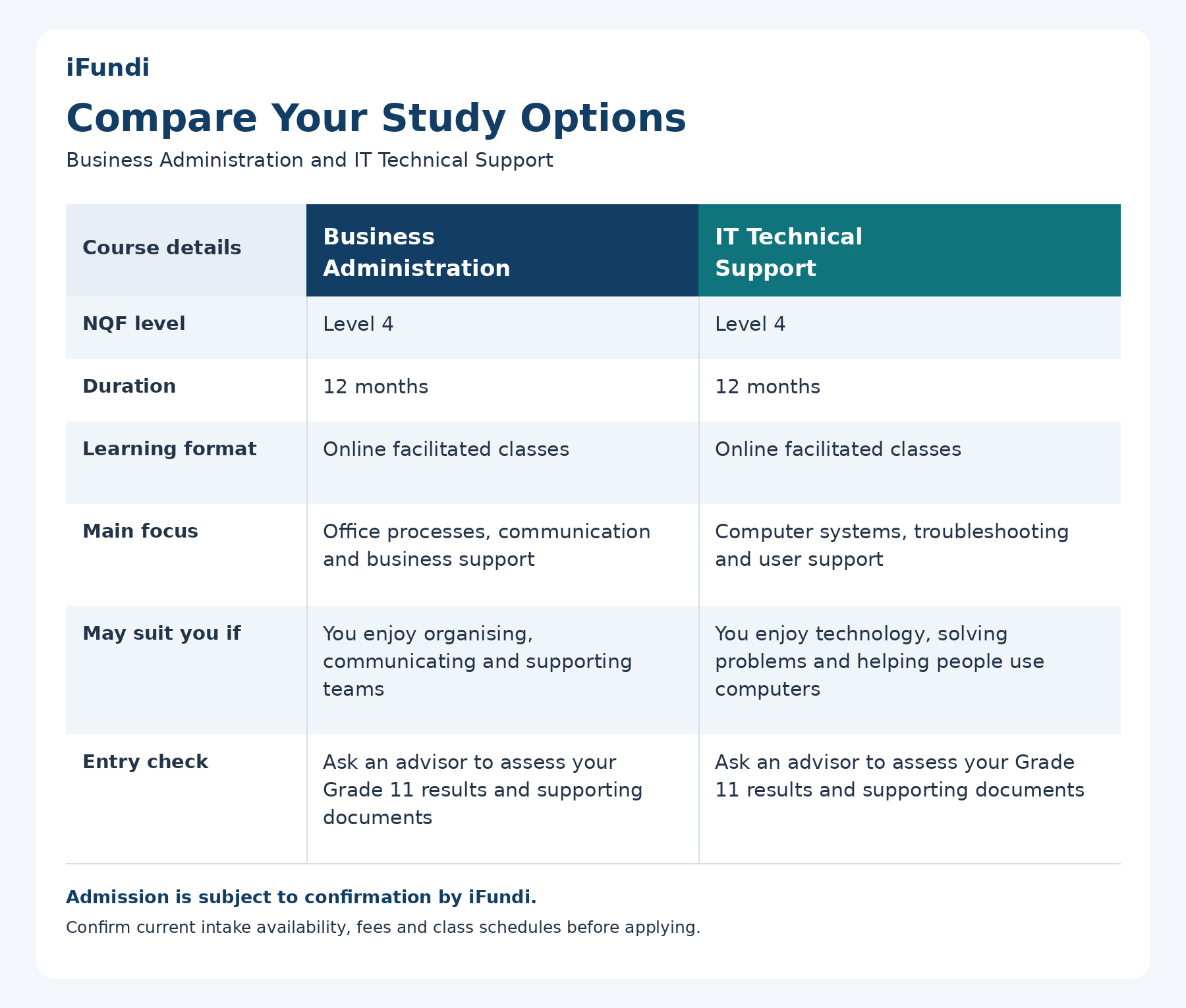
Not sure which option suits you? Tell us your highest completed grade and the type of work you would like to do. An iFundi advisor can help you compare the programmes and confirm admission requirements. Ask About My Study Options
1. Business Administration NQF Level 4
Business Administration may suit you if you want to develop skills for an office or business support environment.
The programme covers areas such as:
-
-
Administrative procedures and document management.
-
Business communication and report writing.
-
Time management and meeting coordination.
-
Customer service.
-
Budgeting fundamentals and teamwork.
-
These skills are relevant to roles such as administrative assistant, office administrator and business support assistant. Employment will depend on the role’s requirements, your experience and available opportunities. View the Business Administration Course
2. IT Technical Support NQF Level 4
IT Technical Support may suit you if you enjoy working with computers and finding solutions to technical problems.
The programme covers areas such as:
-
-
Computer hardware and components.
-
Operating systems.
-
Diagnosing and troubleshooting problems.
-
Basic computer networking.
-
Supporting users and documenting technical work.
-
This programme focuses on supporting computer systems rather than software development. It can help you build a foundation for pursuing technical support, help-desk or computer technician roles. View the IT Technical Support Course
Fees and What to Check Before Applying
Before committing to a course, request a full fee breakdown. Ask about the monthly payment option, upfront payment amount and once-off registration fee of R899.
You should also confirm:
-
-
Whether you meet the entry requirements.
-
Which documents you need to submit.
-
The next available intake.
-
Class days and times.
-
Assessment and practical learning requirements.
-
Computer and internet requirements for online study.
-
Knowing these details will help you decide whether the programme fits your budget and schedule. Request Course Fees and Entry Requirements
Find Out What You Can Study
You do not need to have every part of your career planned before asking for advice.
Tell iFundi your highest completed school grade, whether you prefer business administration or IT, and when you would like to start. An advisor can help you check eligibility, understand the fees and decide on your next step. Speak to an iFundi Advisor
Already confirmed your eligibility and chosen your programme? Complete the Student Registration Form.
PEOPLE ALSO ASK (FAQ)
Can I apply with Grade 11?
You can enquire about the programmes above with Grade 11. An advisor must assess your documents and confirm whether you meet the programme’s admission requirements.
What if I have Grade 10 or a lower school grade?
Contact iFundi before completing a registration form. Explain your highest completed grade and any relevant work experience so an advisor can check whether a suitable study option is available.
Can I study while working?
Both programmes offer online facilitated classes. Confirm the current timetable and required study commitments before enrolling.
Can work experience help me qualify?
It may help where a provider offers Recognition of Prior Learning. Your knowledge and skills must be assessed against relevant requirements; admission or credit is not automatic.
Does an NQF Level 4 qualification replace Matric?
Not automatically. Matric is at NQF Level 4, but other qualifications at that level can have different purposes. Ask the employer or institution whether it accepts your specific qualification.
Can I study while working?
Ask about the programme’s class schedule and workload before registering. Online learning still requires time for attendance, independent study and assessments.

Suprise Fakude
SEO Content Specialist
Suprise Fakude holds a Marketing degree from the Vaal University of Technology and specialises in SEO-driven content creation. Suprise focuses on producing content that not only ranks but also resonates, connecting learners with practical opportunities to upskill and thrive in South Africa’s changing world of work.