
Suprise Fakude
9 minutes read
Quick Summary
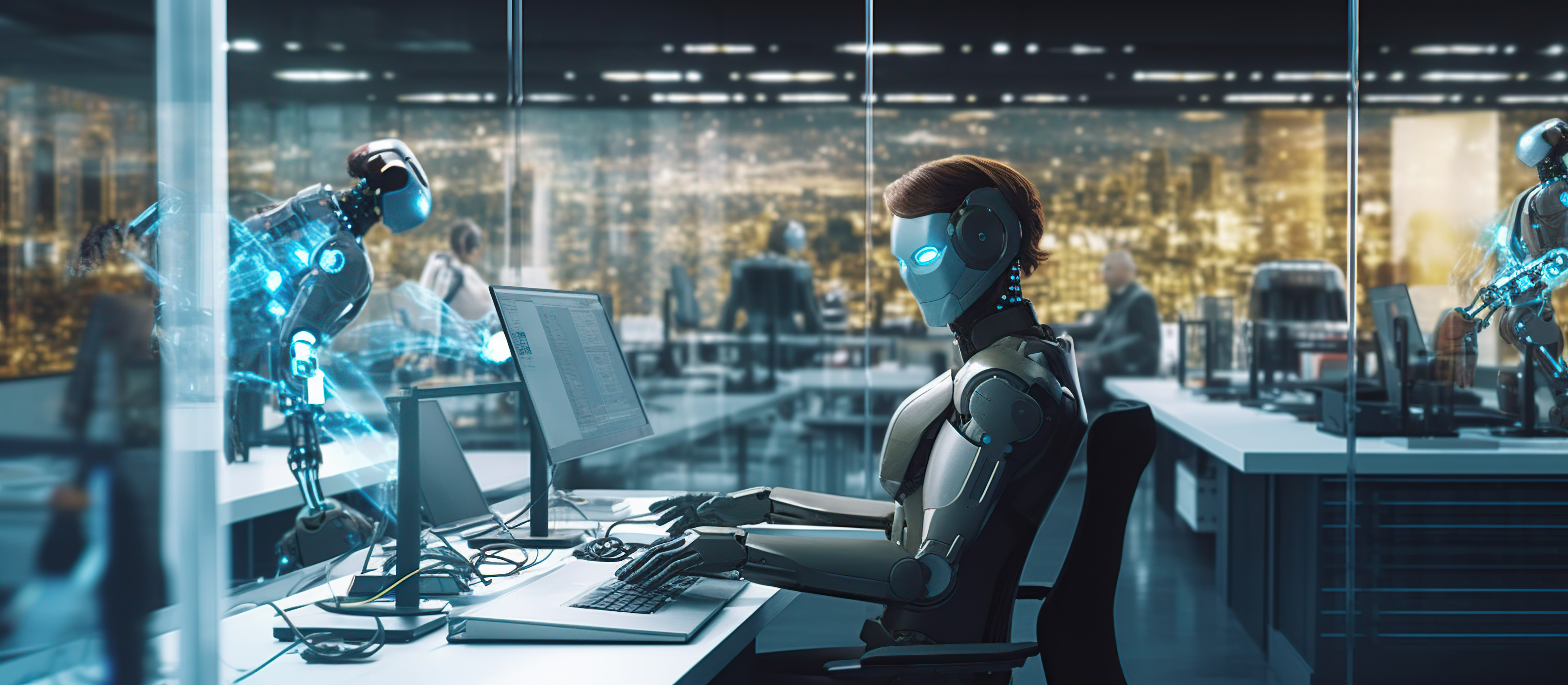
Most employees are now familiar with AI tools that can draft emails, summarise documents or generate ideas. AI agents go further. They can be given an objective, determine the steps required and potentially interact with different systems to get the job done.
For businesses, that creates an opportunity to automate routine work and free employees to focus on tasks that require judgement, creativity and human interaction. But it also raises an important question: how will our jobs and skills need to change when AI can do more of the work itself?
What Are AI Agents in the Workplace?
An AI agent is a software system that uses artificial intelligence to work towards a defined goal with a degree of independence. Think about preparing for a client meeting. A traditional AI assistant might summarise a document when you ask it to. An AI agent could potentially review previous client interactions, gather relevant information, prepare a meeting brief and identify outstanding actions, all as part of one workflow.
In a workplace, AI agents could be used to:
-
- Respond to routine customer queries
- Research potential customers
- Prepare reports and summaries
- Schedule meetings and follow-ups
- Support administrative processes
- Retrieve information from business systems
- Monitor workflows and flag outstanding tasks
The important difference is that AI is moving from simply providing information towards taking action.
How Could AI Agents Change the Workplace?
One of the biggest opportunities is reducing the amount of time employees spend on repetitive work.
A salesperson could spend less time researching prospects and more time building relationships. A manager could spend less time compiling reports and more time supporting their team. An HR professional could spend less time answering routine questions and more time dealing with complex employee needs. This doesn’t necessarily mean entire jobs disappear.
Jobs are made up of different tasks, and AI will be better suited to some than others. Administrative and repetitive activities may become easier to automate, while work involving judgement, relationships and complex decision-making remain more dependent on people.
The World Economic Forum argues that as AI becomes more capable, human roles will increasingly involve defining problems, setting boundaries, evaluating AI’s work and making final decisions. The bigger change may therefore be how jobs are performed rather than whether they exist.
What Skills Will Employees Need?
As AI agents become more capable, employees won’t necessarily need to become AI experts. But they will need to know how to work effectively with AI.
Some of the most important skills will include:
-
- Digital literacy – using AI and other digital tools confidently.
- Critical thinking – evaluating information instead of automatically accepting AI-generated answers.
- Problem-solving – handling situations where automation cannot provide the complete solution.
- Communication – explaining ideas clearly and maintaining strong working relationships.
- Adaptability – learning new tools and adjusting as roles change.
- Leadership – helping teams navigate technological and organisational change.
This is why AI adoption shouldn’t only be a technology conversation. Businesses also need to ask whether their employees have the skills and confidence to adapt.
Organisations looking to strengthen these capabilities can explore iFundi’s courses and training programmes, which support the development of practical business, management and digital workplace skills.
What Are the Risks of AI Agents?
The ability to take action is what makes AI agents useful, but it also creates additional risks.
If an AI tool produces an incorrect answer, an employee can choose not to use it. If an AI agent takes an incorrect action inside a business system, the consequences could be more serious.
Before giving AI agents greater responsibility, businesses need to consider:
-
- What information can the agent access?
- What actions can it perform?
- Which decisions require human approval?
- How will sensitive information be protected?
- Who is responsible when something goes wrong?
These aren’t theoretical concerns. Microsoft’s guidance on AI agent governance highlights issues including unintended data exposure, excessive permissions and unclear accountability as organisations give agents greater access to business systems. The goal shouldn’t be to automate everything simply because it is possible. Businesses need to identify where AI adds genuine value and where people should remain in control.
Final Thoughts
AI agents could become a normal part of everyday work sooner than many organisations expect. But the real shift isn’t simply about what AI can do. It’s about how businesses choose to use it and how prepared employees are to work alongside it.
Automating repetitive tasks could give people more time for problem-solving, communication and decision-making. Achieving that benefit, however, requires businesses to invest in their people as well as their technology.
Employees need the confidence to use new tools, the critical thinking to question their outputs and the adaptability to keep learning as technology evolves. The future workplace may include more AI agents, but people will still determine how effectively those agents are used.
PEOPLE ALSO ASK (FAQ)
What is an AI agent?
An AI agent is a software system that uses artificial intelligence to work towards a goal and complete tasks with a degree of independence. Depending on how it is configured, it may also interact with other tools and business systems.
What is the difference between an AI agent and an AI assistant?
An AI assistant typically responds to a request and helps a person complete a task. An AI agent can potentially perform several actions towards an objective without requiring instructions at every step.
Will AI agents replace employees?
AI agents are likely to automate certain tasks, particularly repetitive and administrative work. However, many roles depend on judgement, communication, creativity, leadership and human interaction. This means many jobs are more likely to change than simply disappear.
What skills do employees need to work with AI?
Digital literacy, critical thinking, problem-solving, communication and adaptability will be increasingly valuable. Employees also need to understand how to evaluate AI-generated information and recognise when human judgement is required.
Can I work while studying an IT qualification?
Many accredited providers offer flexible online learning, allowing students to balance work and study.
How can businesses prepare employees for AI agents?
Businesses should combine AI-specific learning with broader workplace skills development. Training in digital skills, management, communication and problem-solving can help employees adapt as AI becomes a larger part of everyday work.

Suprise Fakude
Content Specialist at iFundi
Suprise holds a Marketing degree from the Vaal University of Technology and specialises in SEO content strategy for education and skills development. She researches and writes authoritative content on occupational qualifications, career development, workforce trends and the future of work, helping learners and employers make informed decisions in South Africa’s evolving education and training landscape.